

By Marc S. Cooper, Chairman and Chief Executive Officer
Technology is rapidly changing how industrial companies compete and grow. Against that backdrop, Solomon is expanding its Industrials practice. Last month, the firm welcomed Geoffrey Blythe as a Partner and Chairman of Industrials, and Gunter Frangenberg as a Partner and Head of Chemicals, Specialty Materials and Life Sciences Tools & Diagnostics. I recently sat down with them to discuss the forces shaping Industrials M&A, where they see the greatest opportunities and their priorities for the platform.
Geoff, what trends are driving deal activity across Industrials M&A?
Several shifts are opening new avenues for growth across Industrials as we see an unprecedented convergence between industrials / materials, healthcare and technology. They are also making companies’ strategic decisions increasingly complex. Those shifts start with automation, software and artificial intelligence, which are lifting productivity on the factory floor. Power and infrastructure needs are driving new investment, and supply chains are moving closer to end customers. Each shift is prompting companies to rethink their portfolios and new growth vectors.
As they do, the key question is whether to build organically, form partnerships or acquire capabilities that strengthen their competitive position. Gunter and I help founders, management teams and boards weigh those choices and plan for where their industries are heading.
Gunter, why are Life Science Tools and Diagnostics increasingly important within Industrials, and how does your expertise in those areas as well as Chemicals and Specialty Materials inform your perspective?
We view Life Science Tools and Diagnostics as the picks and shovels of drug research, discovery and manufacturing. These companies supply reagents, instruments, automation systems, packaging, containment and single-use solutions. They enable innovation, generally without taking on the same success-or-failure risk associated with developing a specific drug.
These businesses share the hallmarks of the industrial companies Geoff and I have advised throughout our careers: specialized manufacturing, mission-critical products and demanding customer requirements. Many times these businesses grew out of chemicals or diversified industrials companies that had specific materials competencies that they looked to expand into faster growth end markets such as Pharma and BioPharma. That experience gives us a clear understanding of both the sector dynamics and the transaction considerations that matter to clients.
AI adds another layer of opportunity: connected software can link laboratory instruments, capture data and accelerate research workflows.
AI is often discussed as a software story. Gunter, from your perspective, how is it changing the industrial landscape?
AI’s industrial impact is still in the early stages. The first wave is the infrastructure build-out: semiconductor manufacturing, electronic chemicals, specialty materials, power and the physical inputs needed to support new capacity. These are the industrial foundations of AI infrastructure.
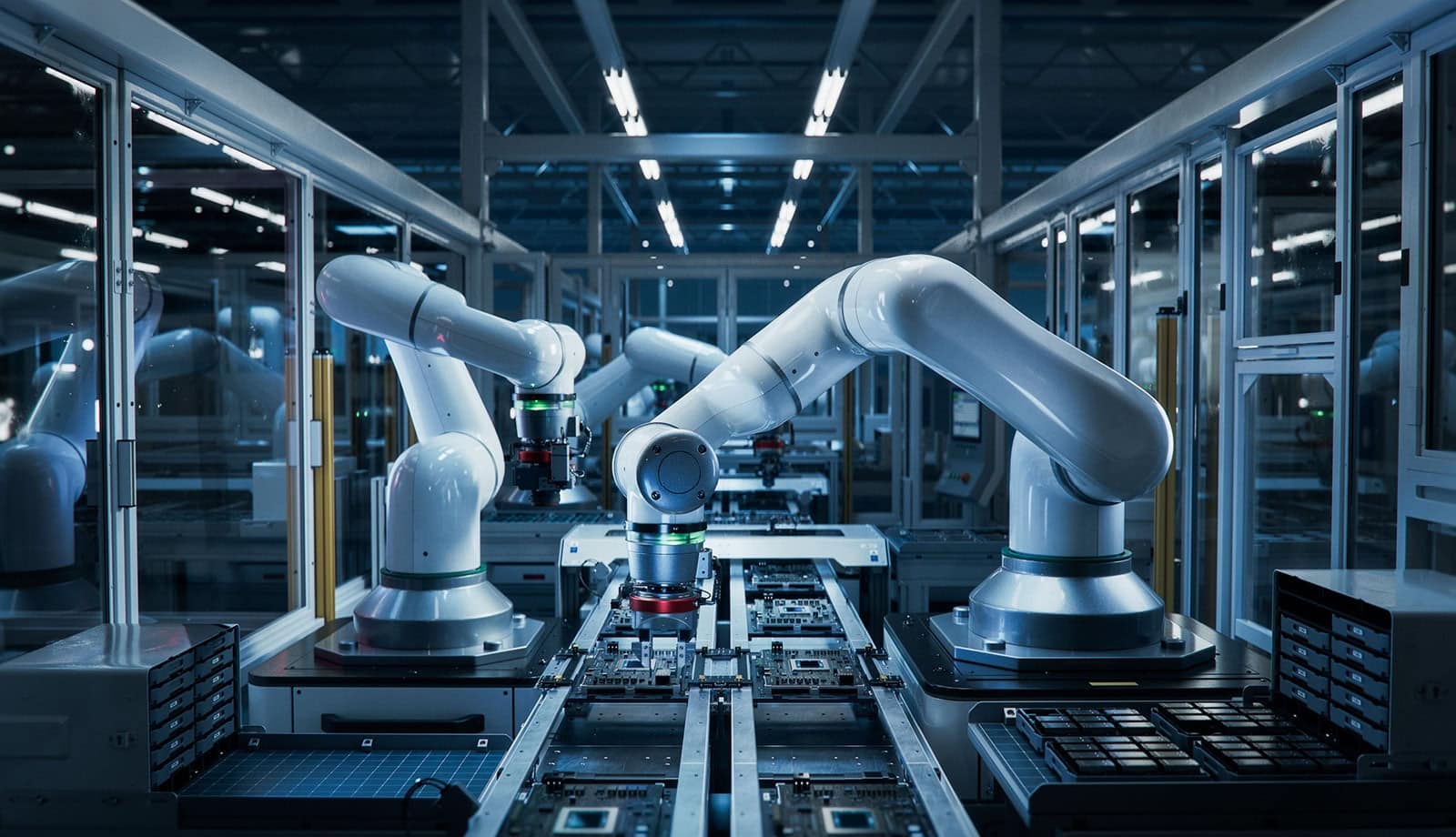
The next wave is AI at the edge — AI running on or near the equipment that uses it, including robots and automation systems. These applications require materials, electronic components, chips, motion control and precision production capabilities, creating opportunities for select industrial businesses.
The opportunity is significant, but selective: AI will not benefit every company across industrials, materials and chemicals. Companies with limited exposure to attractive end markets or high leverage may face a tougher outlook, particularly if rates remain elevated.
Gunter, how does our Industrials practice create value for strategic clients and sponsors?
We start with the client’s strategy and consider where to invest based on “where the puck is going,” which acquisitions or partnerships to pursue and how to shape the portfolio. We bring an in-depth understanding of the client’s subsectors; anticipate the forces reshaping them and translate that perspective into actionable ideas that help leadership teams evaluate their options.
The test for each move is whether it advances the client’s long-term strategy and gives it the ability to maintain its competitive moat into the future without risking potential displacement. We bring deep sector knowledge, sound judgment and decades of experience to that assessment, identifying truly differentiated opportunities and helping clients navigate complex decisions. That is how we build trusted relationships with strategic clients and financial sponsors.
Geoff, what are your priorities as you and Gunter expand Solomon’s Industrials platform?
Our first priority is to stay close to clients as the Industrials sector evolves — listening to their concerns, sharing ideas and helping them understand their options. Those conversations keep our work focused on the issues shaping their businesses.
Second, we plan to expand coverage across Diversified Industrials, Chemicals, Specialty Materials, Water and Filtration, Life Science Tools and Diagnostics, and other industrial end markets. Because industrial companies and supply chains are global, we also see meaningful cross-border opportunities.
Finally, and just as importantly, we want to contribute to the culture that drew us to Solomon. The firm is transparent and collaborative, with a focus on growing the business and delivering the best advice to clients.
Geoff, you and Gunter have worked together for years. Why was this the right time to join Solomon Partners?
We began working together 21 years ago at Merrill Lynch and reconnected more than a decade ago at Guggenheim Securities. We were not looking to move. However, the more we learned about Solomon and its momentum and spent time with you and the team, the more compelling the opportunity became.
This remains a relationship-driven business, and trust is central to it. The firm’s focus on senior-level advice matched how Gunter and I have always worked with clients. They turn to advisors who know their industries, bring them fresh ideas and can execute when an opportunity arises. Solomon’s outstanding advisory platform brings those elements together, and we are excited to help drive the next growth phase.
To learn more about the expansion of Solomon’s Industrials platform, read this announcement.